Last updated: March 27, 2026
Some of the questions that can come up for new breastfeeding moms include:
- “Can I pump and nurse at the same time?”
- “Can I pump and breastfeed concurrently?”
- “Can I feed my baby on one breast while I pump on the other?“
There is actually a lot going on with these questions and what they actually mean. It can be very confusing. Take these scenarios for instance.
- You are a working mom and you breastfeed your baby in the morning. Most of the other parts of the day you spend pumping.
- Your baby latches onto your breasts when you are pumping the other one, though you are mostly an exclusive pumping mom.
- You don’t have time all day and your baby depends on bottles of breast milk. But during the night, you opt to breastfeed her.
- You breastfeed your baby and then pump again to gain extra milk.
If you are or want to be among one of these scenarios, this is known as nursing and pumping at the same time, and you are either doing this simultaneously or concurrently. So, how do you actually do it? In this post you will find a complete guide to nursing and pumping at the same time based on my own personal experience with my 3 children.
Please note, there are affiliate links in this post. Read my privacy & disclosure policy at the bottom of this page to learn more.
Can You Pump and Nurse at the Same Time?
Absolutely! Think of a twin mommy. She has two babies of the same age that are often hungry at the same time.
What does she do? Keep one hungry and feed another? No! Feeding twins at the same time has been the natural solution for ages.
So, if you are breastfeeding your baby on one side and pumping your other breast, you aren’t doing anything unnatural. You can also breastfeed your baby first and then pump the rest of the milk.
In this case it’s imperative to understand what hindmilk and foremilk are. I don’t know if you know about it or not, but this is IMPORTANT!
The foremilk is the milk that flows at the beginning of each feeding. This milk is low in fat and high in lactose. Whereas, hindmilk is high in fat.
When you are breastfeeding your baby first, you are feeding her the foremilk. If you were to then pump and bottle feed the milk, that’s the hind milk you are feeding. Needless to say, pumping and nursing simultaneously can help to balance a lactose overdose for your baby.
How Do I Pump and Nurse at the Same Time?
It’s actually not that hard to pump and nurse at the same time once you get used to it as time goes on. There are a few options that you can use to pump and nurse simultaneously, which we will review below. You can use just one of them or all of them, depending on your situation.
1 – Pump At The Same Time the Baby Is Nursing
This is what is known as pumping and nursing concurrently. Once your baby is latched onto a breast, you pump the other one. One crucial thing to consider with this method is the type of pump to use.
Hands-free breast pumps are perfect for this situation. You won’t have to hold the pump, which means you can use your free hand to help your baby or even scroll through emails. Based on experience and research, I found that the Elvie & Willow breast pumps are the best hands free breast pumps to invest in.
2 – Pump Before Nursing
You can also pump before breastfeeding your baby. I think this is the best approach to simultaneous feeding as the foremilk is pumped first, so that the baby can directly feed the hindmilk.
3 – Pump After Nursing
Yes, you can pump after nursing as well. In this case, make sure your baby doesn’t overfeed on the foremilk.
4 – Nurse in the Morning, Pump Throughout the Day
I tell every mom to start the morning with a breastfeeding session. Not all moms know this, but breastfeeding helps your baby to wake up. This is just like how the nighttime breastfeeding helps your baby to fall asleep. Interesting, isn’t it?
5 – Pump After Baby Feeds One Side and Interchange
Sometimes babies will feed one side and fall asleep or just not feed anymore. This is a situation where you can pump the other side to balance your milk production. Also, make sure to change sides. When you pump on the left in a session, do it on the right for the next session.
Pumping and Breastfeeding at the Same Time Schedules
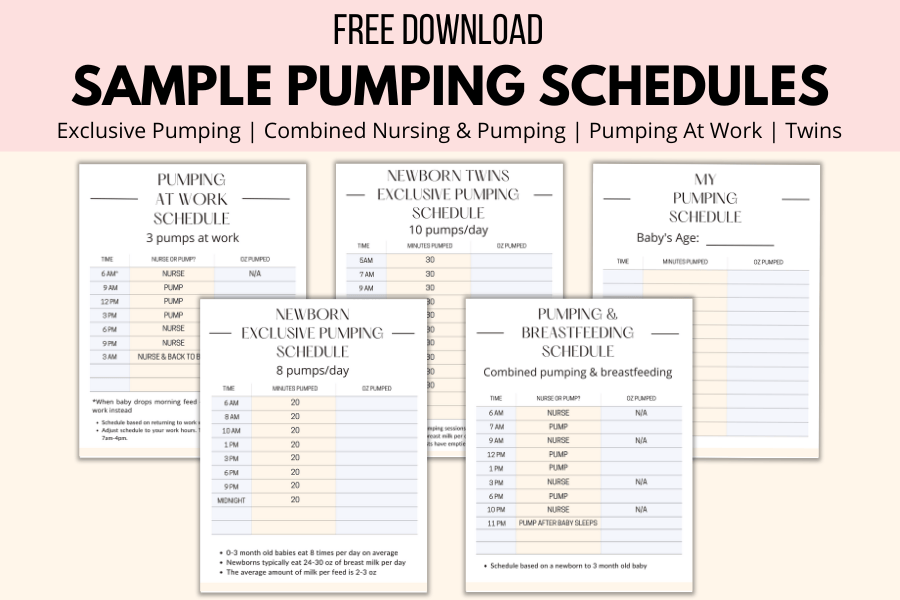
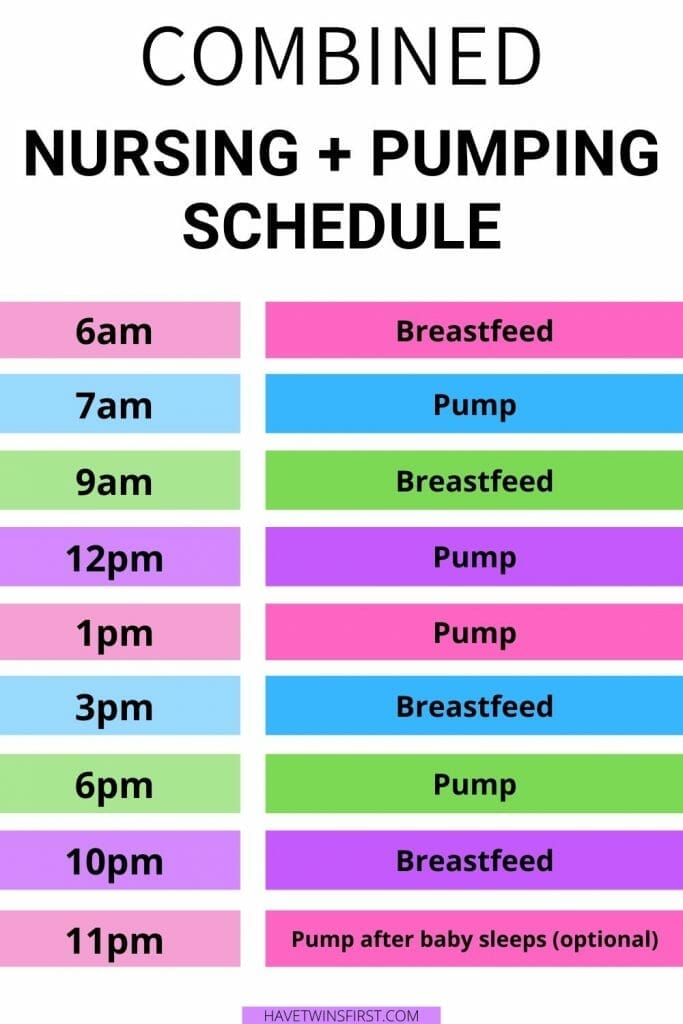
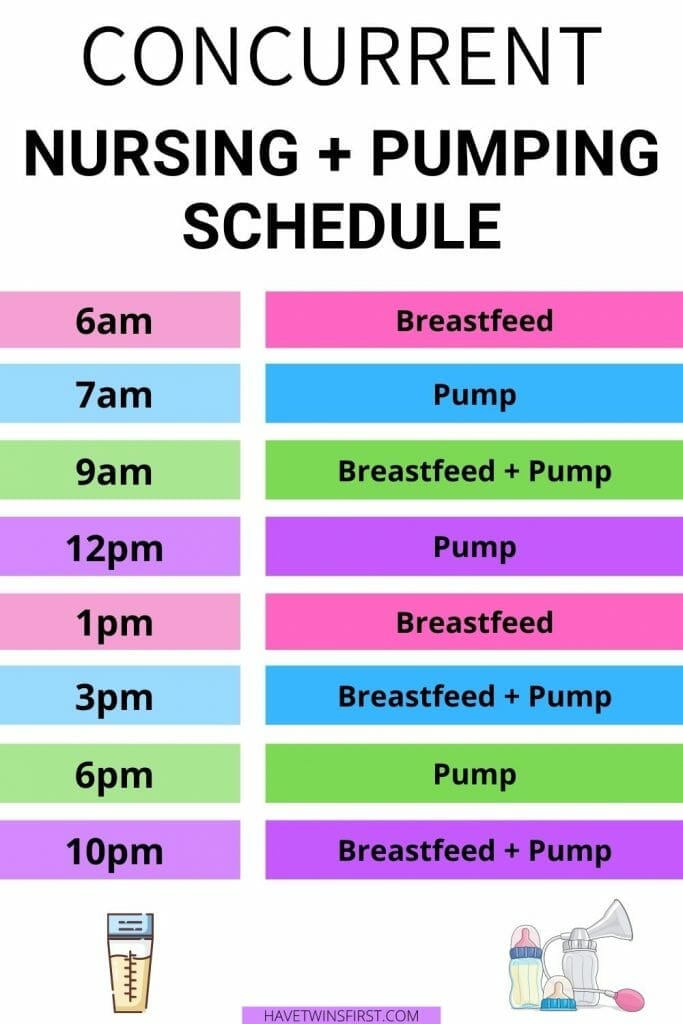
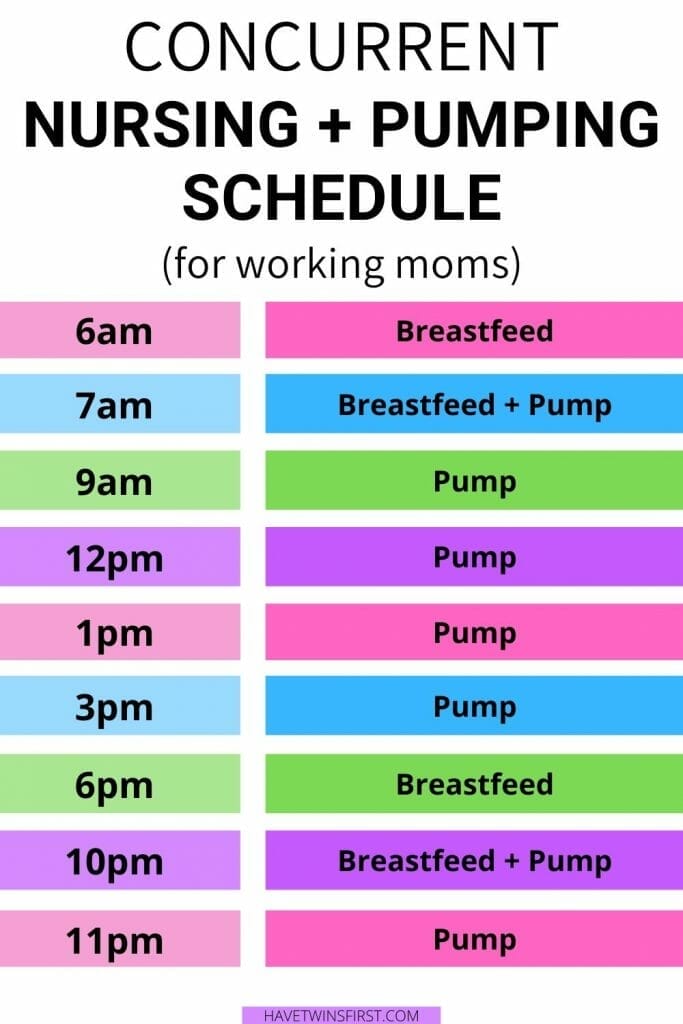
Below you will find a few sample schedules for simultaneous breastfeeding and pumping. They include a non-concurrent pumping and breastfeeding schedule, a concurrent schedule, and a working mom schedule.
If you would like FREE printable versions of some of these schedules, just click the button below!
Combined Nursing & Pumping Schedule (Not Concurrently)
Concurrent Nursing & Pumping Schedule
Concurrent Nursing & Pumping Working Mom Schedule
This schedule assumes 9am to 5pm is the time for your pumping at work schedule. Check out this Back To Work Pumping class for even more help navigating this change in your life.
How To Keep Track of your Combined Pumping and Nursing Progress

For moms who are combining breastfeeding and pumping I recommend this printable planner to keep track of your combined nursing and pumping schedule, how much you pumped, how much your baby is eating, and more! It includes the following pages:
- Newborn to 3 Month Old Sample Pumping And Breastfeeding Schedule
- Sample Pumping At Work Schedule (3 pumps per day)
- Sample Pumping At Work Schedule (2 pumps per day)
- Blank Pumping And Breastfeeding Schedule (you write your own schedule)
- Pumping Privacy Sign
- Breast Milk Storage Guidelines
- Pumping Log
- Breast Milk Inventory Sheet
- Pump Part Replacement Tracker
- Daily Baby Feeding & Diaper Log
Reasons to Pump and Breastfeed Simultaneously
Other than saving time and balancing the foremilk-hindmilk, there are a few more reasons why pumping and breastfeeding simultaneously might work for you.
Increase Milk Supply
Yes, yes, yes! Increasing milk supply is the ultimate goal for most moms.
When your baby is feeding on a breast, it provides nipple stimulation. So, when you pump on the other, the milk flow will be better and there will be more volume.
Another way to explain this is when you pump after your baby feeds, your body gets the signal that more milk is needed to be produced and hence you get more milk.
More help: Check out this class for help increasing your milk supply as a pumping mom!
Baby Won’t Let Me Pump
Yikes! This happened to me a lot. Whenever I started to pump, my little one would cry and make indications that she wanted to breastfeed, even though she was full.
It’s like she was jealous of the pump. So, the best solution was to breastfeed on one breast and pump on the other.
Baby Only Nurses One Side Per Feeding
As was mentioned previously, sometimes your baby will nurse on just on one side or fall asleep. If you leave it like this, the other breast will start producing less milk. Pump the other breast right after your baby feeds to balance the milk flow.
How To Successfully Pump and Nurse Simultaneously
There are some common mistakes that are made when nursing and pumping at the same time. Be sure to avoid these errors.
- Poor breastfeeding or pumping positioning
- Disorganized feeding
- Concurrently pumping and nursing too often.
If you avoid those mistakes and also use the tips below, you will be in good shape to successfully pump and nurse at the same time.
Setup an Appropriate Nursing & Pumping Station
When you are pumping and nursing at the same time, you really have to stay on the top of your game. You could benefit from setting up a feeding station that will help you organize everything and provide a comfortable position for your baby.
Invest in an optimal nursing pillow that will support your baby and also provide room to pump simultaneously. Next, find a dedicated space in your home where you can feel comfortable.
Keep in mind you will need space to keep the breast pads, storage bags, and other breastfeeding essentials and pumping necessities all in one place. Alternatively, you could buy a bag that can store everything you need from the pump to diapers. Lastly, don’t forget to change your breast pump parts when needed for maximum milk production.
Drink Lots of Water
Staying hydrated is key. Drinking water will help avoid dehydration. Try to drink plenty of water even when you aren’t thirsty. Your body will become more effective and you won’t feel tired. Exhaustion isn’t a good thing for concurrent pumping and nursing.
Pumping and Breastfeeding Concurrently Should Only Be For Some Feeding Sessions Not All
You heard it right. You can refer to the sample breastfeeding and pumping schedules and you won’t find simultaneous feeding and pumping in every session.
If you do it frequently, it will create an oversupply that will make your breasts engorged. Unless increasing milk supply is your only goal, you should mix it up.
There are a lot of reasons why you might want to consider nursing and pumping at the same time or simultaneously for your baby.
If you are trying to increase your milk supply, give your baby the right balance of foremilk and hindmilk, or if your baby only nurses on one side per feeding, then concurrent nursing and pumping is a great solution. Additionally, if you prefer to breastfeed sometimes and pump other times, or if you are a working mom these are more reasons why you might be nursing and pumping at the same time.
You can either pump before nursing, pump and breastfeed together, or nurse in the morning and pump throughout the day. Make sure to drink lots of water and avoid simultaneous pumping and nursing too frequently.
If you are patient, stick with one of the sample schedules provided, and follow the tips above you will have a great chance at succeeding with nursing and pumping simultaneously. Good luck as you navigate nursing and pumping at the same time – you can do it!